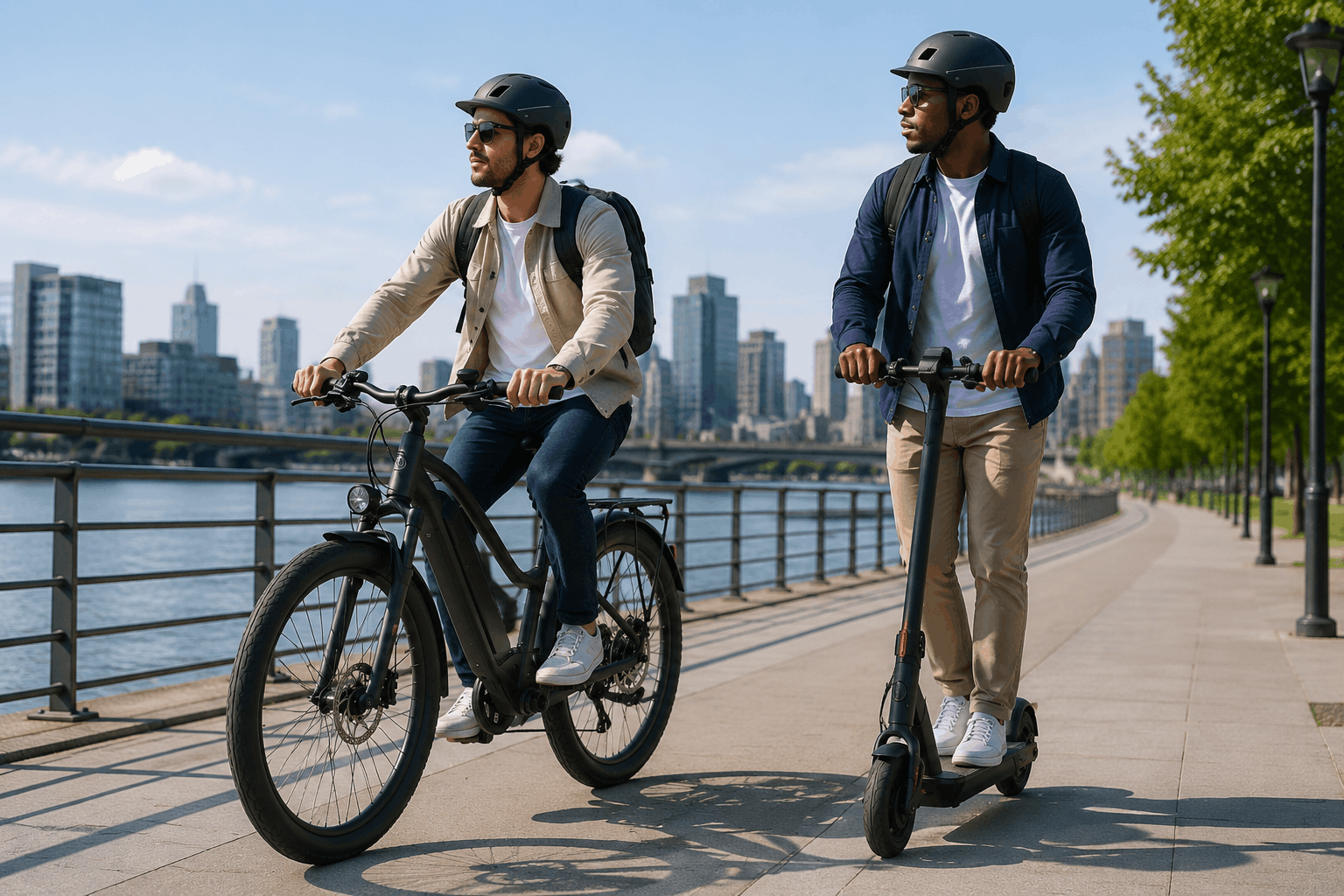
Choosing the right way to travel to work can make a big difference to your daily routine. With rising fuel costs, busy roads and increasing interest in greener transport options, many UK commuters are looking beyond cars and public transport. Two of the most popular alternatives are electric scooters and electric bikes. Both offer a convenient way to travel, but they are designed for very different types of journeys.
The main question is: E scooter vs e bike, which one is better for commuting?
The answer depends on factors such as your journey distance, storage space, comfort preferences, local roads and whether you want exercise as part of your daily travel. An electric scooter may be ideal for short city trips, while an electric bike often provides better comfort, range and versatility for longer commutes.
This guide compares e scooters and e bikes to help you decide which option suits your commuting needs in the UK.
E Scooter vs E Bike: The Main Difference
Although both vehicles use electric power, they work in different ways.
An electric scooter is a compact, lightweight vehicle with a standing riding position. It is designed mainly for quick and convenient short-distance travel.
An electric bike works more like a traditional bicycle but includes a motor that helps while you pedal. It offers a seated riding position and is generally better suited to longer journeys.
The biggest differences come down to:
- Comfort
- Travel distance
- Speed
- Storage
- Legal requirements
- Practicality in different weather conditions
Understanding these differences is important before choosing one for your daily commute.
Are Electric Scooters Better for Commuting?
Electric scooters have become popular because they are simple, portable and easy to use.
For commuters who travel short distances, an e-scooter can be a convenient option. Many models are lightweight enough to carry into offices, shops or onto public transport.
They are particularly useful for:
- Short urban journeys
- Last-mile travel from train stations
- Flat routes
- People with limited storage space
For example, someone travelling two or three miles through a city centre may find an electric scooter quicker and easier than walking or waiting for a bus. However, electric scooters also have limitations. Smaller wheels can make rough roads, potholes and uneven surfaces uncomfortable compared with an electric bike.
Are Electric Bikes Better for Commuting?
Electric bikes are often considered a more practical long-term commuting solution because they combine the benefits of cycling with motor assistance. Unlike a standard bicycle, an e-bike helps reduce the effort required when riding uphill, travelling longer distances or facing strong winds.
An electric bike can be a better choice for commuters who:
- Travel more than a few miles each day
- Ride on mixed road surfaces
- Want a more comfortable journey
- Need extra carrying capacity
- Prefer a seated riding position
Many UK commuters choose e-bikes because they can arrive at work without feeling exhausted, while still enjoying the benefits of active travel.
Comfort Comparison: E Scooter vs E Bike
Comfort is one of the biggest differences between an e-scooter and an e-bike.
Electric scooters require you to stand while riding. This is fine for short journeys but can become tiring over longer distances.
Electric bikes provide:
- A comfortable saddle
- Better riding posture
- Larger wheels
- Improved stability
The larger frame and wheels of an e-bike make it more suitable for longer commutes and changing road conditions. If your daily journey involves busy roads, hills or uneven surfaces, an electric bike is usually the more comfortable option.
Which Has Better Range: E Scooter or E Bike?
Range is an important factor for commuters because nobody wants their battery to run out halfway through a journey. Electric scooters generally have smaller batteries because they are designed to remain lightweight and portable. Electric bikes usually have larger batteries, allowing them to travel further on a single charge.
The actual range depends on:
- Battery size
- Rider weight
- Terrain
- Riding mode
- Weather conditions
- Tyre pressure
For occasional short trips, an electric scooter’s range may be more than enough. For daily commuting, especially longer routes, an electric bike often provides greater flexibility.
Speed Comparison Between Electric Scooters and Electric Bikes
Speed depends on the model, but UK regulations are an important consideration.
A legal electric bike in the UK can provide assistance up to 15.5 mph (25 km/h) before the motor stops helping. Electric scooters currently have different legal restrictions in the UK. Privately owned e-scooters cannot generally be used legally on public roads, pavements or cycle lanes unless they are part of an approved rental trial scheme. This is a key difference for UK commuters. While e-scooters are popular in many countries, their legal use in Britain is more restricted.
Storage and Portability: Which Is More Convenient?
Electric scooters have a clear advantage when it comes to portability.
Many e-scooters can be folded and carried easily, making them useful for:
- Train commuters
- Small flats
- Offices with limited storage
Electric bikes are larger and heavier, although folding electric bikes can offer a compromise between convenience and comfort. If storage space is your biggest concern, an electric scooter may be easier to manage. However, if you have secure bike storage available, an e-bike offers more benefits for daily commuting.
Cost Comparison: Electric Scooter vs Electric Bike
Price is often a deciding factor.
Electric scooters are generally cheaper to buy because they have:
- Smaller batteries
- Simpler designs
- Fewer components
Electric bikes usually cost more because they include:
- Larger battery systems
- Bicycle-quality components
- More powerful frames
- Advanced motor technology
While the initial cost of an e-bike may be higher, it can provide better value for frequent commuters because it is more versatile and suitable for a wider range of journeys.
Maintenance Differences
Both options require basic maintenance, but the type of maintenance differs.
Electric scooters usually need attention to:
- Tyres
- Brakes
- Battery care
- Folding mechanisms
Electric bikes require similar maintenance to normal bicycles, including:
- Brake checks
- Chain maintenance
- Gear adjustments
- Tyre replacement
One advantage of electric bikes is that many repairs can be handled by traditional bike shops because they share many standard bicycle components.
Riding in UK Weather: Which Performs Better?
British weather is another factor worth considering.
Rain, wind and poor road conditions can make commuting challenging.
Electric bikes generally perform better because they have:
- Larger tyres
- Better stability
- A seated riding position
- More control on uneven surfaces
Electric scooters can be less comfortable in heavy rain or on wet roads because of their smaller wheels and standing position.
For year-round commuting in the UK, an electric bike is often the more practical choice.
UK Legal Considerations: E Scooter vs E Bike
Before buying either option, it is important to understand the legal differences.
A road-legal electric bike must meet UK requirements, including:
- Maximum motor power of 250 watts
- Assistance stopping at 15.5 mph
- Working pedals
- Minimum rider age of 14
Compliant e-bikes can generally be used on roads and cycle paths without a licence, registration or compulsory insurance.
Electric scooters are different. Privately owned e-scooters are currently not generally legal for use on public roads or cycle lanes in the UK, except under specific government-approved rental schemes.
This makes electric bikes a more straightforward option for many UK commuters.
Which Is Better for Your Daily Commute?
The best choice depends on your lifestyle and journey.
An electric scooter may suit you if:
- Your commute is very short
- You need something compact
- You use public transport regularly
- Storage space is limited
An electric bike may be the better choice if:
- Your commute is longer
- You want comfort
- You ride regularly
- You need better performance on hills
- You want a legal everyday transport option in the UK
For most regular commuters, an electric bike offers greater flexibility and practicality.
Conclusion
When comparing E scooter vs e bike, both options have advantages, but they suit different types of commuters. Electric scooters are lightweight, portable and useful for short journeys, especially where storage is limited. However, legal restrictions in the UK can make them less practical for everyday commuting. Electric bikes provide better comfort, longer range and greater flexibility, making them a stronger choice for many UK commuters. If you need a reliable transport option for regular journeys, an electric bike is often the better investment. It combines convenience, practicality and the freedom to travel without depending on fuel, traffic or public transport schedules.