Electric bikes have become one of the most popular ways to travel, offering a quicker and easier alternative to traditional cycling. Whether you’re commuting to work, exploring countryside routes or simply looking for a more convenient way to get around, one question often comes up before buying an e-bike: how fast do e bikes go?
The answer depends on several factors, including the type of electric bike, motor power, battery capacity, rider weight, terrain and local regulations.
In the UK, a standard road-legal e-bike can provide electric assistance up to 15.5 mph (25 km/h) before the motor automatically stops helping. However, some electric bikes designed for different purposes can reach much higher speeds when used under appropriate regulations.
Understanding electric bike speed is important because it helps you choose the right model for your needs while ensuring you stay within UK laws.
This guide explains how fast can electric bikes go, what affects an e-bike’s speed, and what you should know before purchasing one.
How Fast Can Electric Bikes Go?
A typical UK electric bike can reach speeds of around 15 to 20 mph during normal riding conditions. However, the maximum speed depends on whether the bike is designed to meet UK road regulations or built for higher-performance use.
For most riders, the important figure is not the absolute speed of the motor but how quickly the bike can help you reach a comfortable cruising speed.
Several factors influence an e-bike’s speed, including:
- Motor power
- Battery voltage and capacity
- Rider weight
- Tyre type and pressure
- Wind conditions
- Road surface
- Riding mode selected
- Level of pedal assistance
A lightweight commuter e-bike on flat roads may feel much faster than a heavier mountain e-bike climbing steep hills, even if both have similar motors.
What Is the Top Speed of an Electric Bike in the UK?
For a standard electric bike that follows UK regulations, the top assisted speed electric bike limit is:
15.5 mph (25 km/h)
Once the bike reaches this speed, the motor must stop providing assistance. The rider can continue travelling faster by pedalling, going downhill or using their own effort.
This limit applies to electric bikes classified as Electrically Assisted Pedal Cycles (EAPCs).
A legal UK e-bike must also have:
- A maximum motor power output of 250 watts
- Working pedals that help move the bike
- Electric assistance that cuts off at 15.5 mph
- A minimum rider age of 14 years
These rules allow electric bikes to be treated similarly to traditional bicycles in the UK.
Why Are UK Electric Bikes Limited to 15.5 mph?
The speed restriction exists to maintain a balance between convenience, safety and compatibility with existing cycling infrastructure.
Electric bikes are designed to provide assistance rather than replace the effort of cycling completely. The motor helps riders:
- Start more easily from a stop
- Handle hills with less effort
- Travel longer distances comfortably
- Arrive at destinations without excessive fatigue
Without speed restrictions, higher-powered electric bikes could create greater risks for pedestrians, cyclists and other road users.
Can You Make an Electric Bike Go Faster?
Many riders search for ways to increase their electric bike speed, but modifying an e-bike to remove speed restrictions can affect whether it remains legal.
Some e-bikes have settings, controllers or software adjustments that allow higher speeds. However, if the bike exceeds UK legal limits, it may no longer be considered a standard electric bicycle.
A modified e-bike could potentially require:
- Registration
- Insurance
- Vehicle tax
- Appropriate licensing
Before making any modifications, it is important to understand the legal consequences.
Do More Powerful Electric Bikes Go Faster?
Yes, a more powerful motor can increase speed, but it is not the only factor involved.
For example:
250W Electric Bike
A 250W motor is the standard legal limit for UK road-use e-bikes.
Advantages include:
- Fully compliant with UK regulations
- Suitable for commuting
- Good battery efficiency
- Comfortable everyday riding
- Higher-Power Electric Bikes
Some electric bikes have motors above 250W, such as 500W or 750W models.
These can offer:
- Faster acceleration
- Better performance on steep hills
- Higher potential speeds
However, they may not qualify as legal e-bikes for normal road use in the UK.
What Factors Affect Electric Bike Speed?
Even two bikes with identical motors can perform differently. Here are the main factors that influence speed.
Motor Power
The motor determines how much assistance the bike can provide.
A stronger motor can make acceleration easier, especially when:
- Starting uphill
- Carrying extra weight
- Riding against strong winds
However, motor power alone does not always determine maximum speed because legal restrictions may limit assistance.
Battery Capacity
Battery capacity affects how long an e-bike can maintain performance.
A larger battery can help you:
- Travel longer distances
- Maintain consistent power
- Ride more comfortably on longer journeys
However, a bigger battery does not automatically mean a faster bike.
Rider Weight
The weight of the rider and any additional luggage affects speed and acceleration.
A lighter rider may reach higher speeds more easily, while heavier loads require more motor assistance.
Terrain and Riding Conditions
Flat roads allow electric bikes to maintain higher speeds, while hills and rough terrain naturally reduce speed.
Weather conditions also matter. Strong winds, wet surfaces and cold temperatures can all affect performance.
Tyres and Bike Design
Road-style electric bikes are usually faster because they have:
- Narrower tyres
- Lighter frames
- More aerodynamic designs
Electric mountain bikes, on the other hand, prioritise grip and durability rather than maximum speed.
How Fast Do Different Types of Electric Bikes Go?
Different e-bike styles are designed for different riding purposes.
Electric Commuter Bikes
Most commuter e-bikes are designed for practical everyday travel.
Typical speed:
- Around 15–20 mph depending on conditions
They focus on comfort, reliability and battery efficiency.
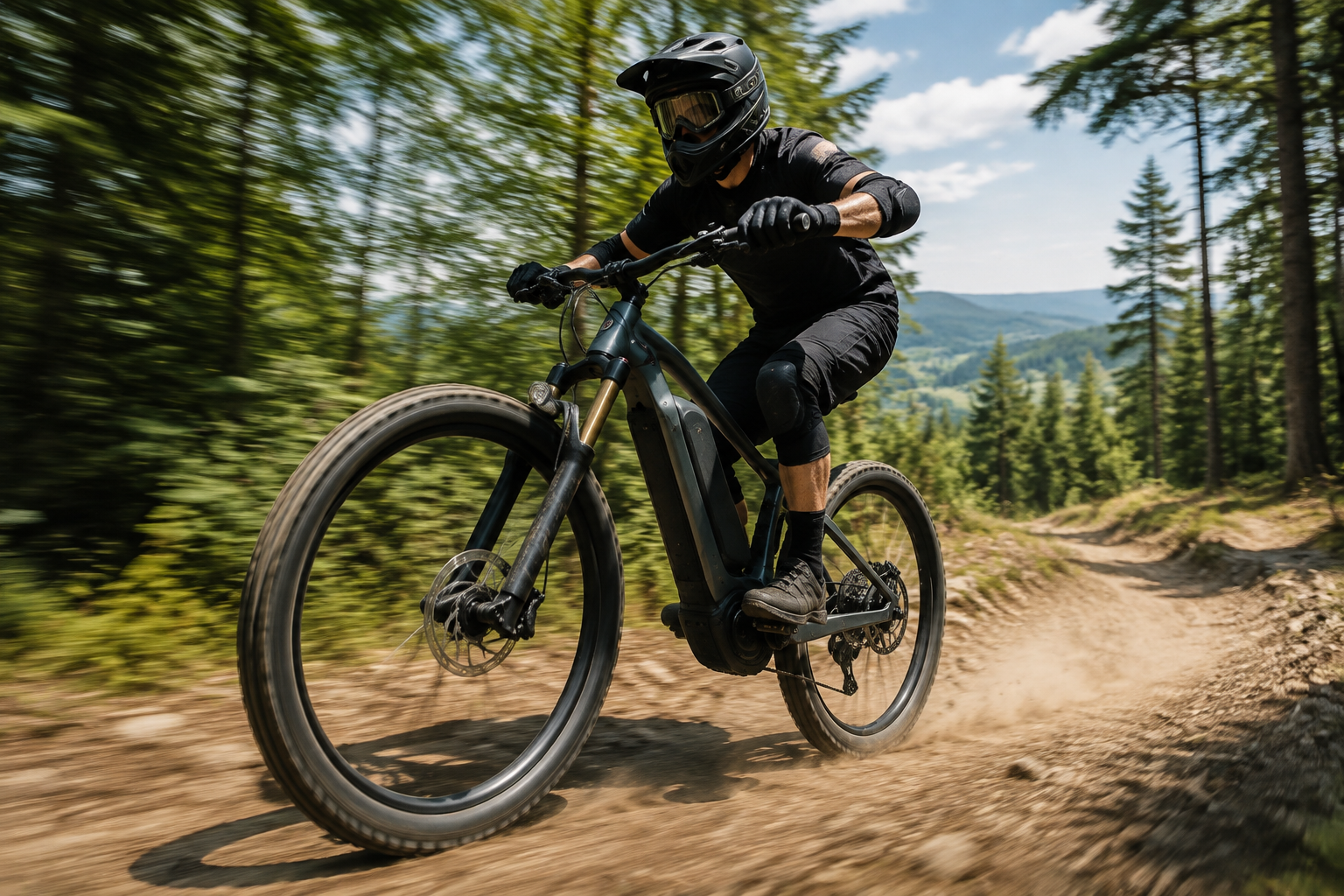
Electric Mountain Bikes
E-MTBs are built for trails, hills and uneven ground.
Typical speed:
- Around 15–25 mph depending on model and regulations
Their strength is handling difficult terrain rather than pure speed.
Electric Road Bikes
Electric road bikes are lightweight and designed for longer distances.
They offer:
- Faster acceleration
- Efficient riding
- Comfortable cruising speeds
Folding Electric Bikes
Folding e-bikes are popular with commuters because they are easy to store and transport.
Their speed is usually similar to standard commuter models.
Are Faster Electric Bikes Better?
Not necessarily.
A faster electric bike is not always the best choice. The right option depends on how you plan to use it.
A commuter travelling through busy city streets may benefit more from:
- Comfort
- Battery range
- Easy handling
- Reliability
Someone riding longer rural routes may prefer:
- More battery capacity
- Stronger hill performance
- A sportier design
Speed is only one part of choosing the right e-bike.
How Fast Can Electric Bikes Go Compared to Normal Bikes?
A traditional cyclist’s speed depends heavily on fitness and riding conditions.
An average cyclist may travel around:
- 10–15 mph on normal journeys
An electric bike allows many riders to maintain:
- Around 15 mph with less physical effort
This makes e-bikes particularly useful for people who want cycling benefits without arriving tired or needing a shower after every journey.
Conclusion
So, how fast do e bikes go? For most riders in the UK, a standard electric bike will provide assistance up to 15.5 mph, offering a comfortable balance between speed, safety and practicality.
While some high-performance models can travel much faster, they may not follow UK electric bike regulations and could require additional legal requirements.
When choosing an e-bike, consider more than just speed. Battery range, comfort, reliability and how you plan to use the bike are equally important. The best electric bike is the one that matches your lifestyle and gives you a safe, enjoyable riding experience.